



Successfully Submitted
What Is Robotics for Kids? Learn with Simple Examples
By Vaishnavi E
November 5, 2026 (Last Updated) | 6 mins read
Have you ever seen a robot clean a house, build a car, or serve food in a restaurant? Have you ever wondered what this technology is called?
That’s where robotics comes in!
Robotics is an interesting field of technology that involves designing, building, and programming robots to perform different tasks. From simple robots that follow a line to advanced robots that assist doctors, robotics is already a part of our everyday lives.
Let’s understand what robotics means, how it works, and explore some simple examples of robots.
What Is Robotics for Kids?
Let’s understand what robotics is for kids in simple words.
Robotics is a branch of technology that involves designing, building, programming, and operating robots.
Robotics combines Science, Technology, Engineering, and Mathematics (STEM) to create robots and make them perform different tasks.
In simple words, robotics is all about creating machines called robots that can perform different tasks by following instructions.
But what exactly is a robot?
A robot is a machine designed to carry out specific tasks. Some robots can move around, some can pick up objects, and others can perform tasks that may be difficult or repetitive for humans.
For example, imagine a robot vacuum cleaner. Instead of cleaning the floor yourself, you can switch it on, and it moves around your house, detects obstacles, and cleans the floor automatically.
Similarly, robots are used in factories to assemble cars, in homes to clean floors, on farms to plant seeds and harvest crops, and in warehouses to move packages from one place to another.
These examples show how robots can perform different tasks, make our daily work easier, and save time and effort.
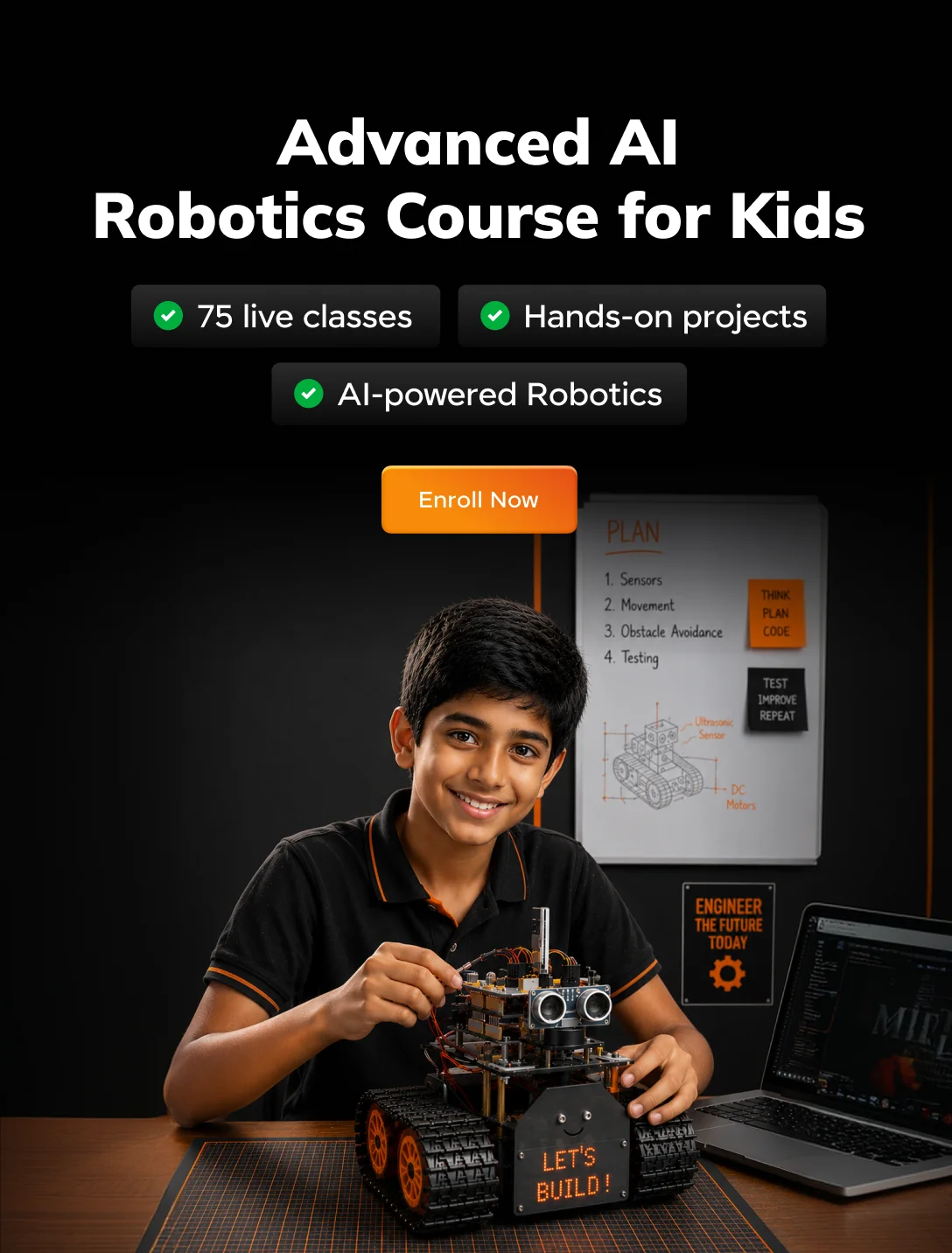
Ready to explore how robots work and build one of your own? Join HackerKID’s Advanced AI Robotics Course for Kids and introduce your child to robotics through hands-on projects.
How Does Robotics Work?
Have you ever wondered how a robot knows what to do?
Robots work by following instructions given to them. These instructions can be programmed using coding or provided through human control. Depending on how they are designed, some robots can also sense their surroundings and respond to changes.
Let’s understand this with a simple example.
Imagine an obstacle-avoiding robot.
Suppose you have a small obstacle-avoiding robot moving across a room. What happens when it comes across a chair?
1. The robot moves forward by following its instructions.
2. It detects the chair in front of it using its sensors.
3. It receives information about the obstacle.
4. It changes its direction to avoid hitting the chair.
5. It continues moving along its path.
Isn’t that interesting?
This is how robots perform tasks by combining instructions, movements, and information from their surroundings.
5 Simple Examples of Robots
Now that we understand what robotics is and how robots work, let’s explore some robots that you might have seen or heard about.
1. Waiter Robot
Have you ever seen a robot serving food in a restaurant?
A waiter robot helps restaurant staff by carrying food and drinks from the kitchen to customers’ tables. It moves around the restaurant using its navigation system. Some waiter robots can also detect and avoid obstacles along the way.
2. Lawn-Mowing Robot
Did you know that robots can cut grass too?
A lawn-mowing robot moves around a garden and cuts grass automatically. It follows a planned path to cover the lawn. Some models can also detect obstacles such as trees and garden furniture and avoid them while mowing the lawn.
3. Farming Robots
Robots are also helping farmers with their daily work!
Farming robots are designed to perform different agricultural tasks, such as planting seeds, removing weeds, spraying crops, and monitoring plant health. Some advanced farming robots can even pick fruits and vegetables when they are ready to be harvested.
4. Factory Robots
Have you ever wondered how so many cars are assembled in factories?
Factory robots help workers perform tasks such as welding, painting, lifting heavy objects, and assembling car parts. They follow programmed instructions to complete these tasks accurately and repeatedly.
5. Medical Robots
Did you know that robots are also used in hospitals?
Some medical robots assist doctors during surgeries by allowing them to control special instruments with precise movements. Other hospital robots help transport medical supplies, deliver medicines, and assist hospital staff with their daily activities.
How Are Robots Different from Regular Machines?
Is every machine a robot? No! All robots are machines, but not all machines are robots.
Let’s understand this with a simple example.
A regular vacuum cleaner cleans the floor when a person switches it on and moves it around. It depends on the person to guide its movement.
Now, think about a robot vacuum cleaner. It can move around a room, detect obstacles, change its direction, and clean the floor automatically by following programmed instructions.
Now, think about a robot vacuum cleaner. It can move around a room, detect obstacles, change its direction, and perform its cleaning task with minimal human involvement.
The main difference is that robots follow instructions to perform tasks and can also respond to their surroundings, depending on how they are designed.
Conclusion
Now that you understand what is robotics for kids, you can see that robotics is much more than building machines. It is about creating smart machines that can follow instructions and perform useful tasks.
From cleaning our homes to exploring distant planets, robots are making many activities easier and helping people in different fields.
Join HackerKID’s Advanced AI Robotics Course for Kids and give your child hands-on experience in building robots while introducing them to future-ready technologies at a young age.
FAQs
💬 Quick Answers 1. What is robotics for Kids
Robotics is a branch of technology that involves designing, building, programming, and operating robots. It combines science, technology, engineering, and mathematics to develop robots that can perform different tasks.
2. What is the best age to start robotics?
Children can start learning robotics at around 7 years old with simple, age-appropriate activities. As they grow, they can explore more challenging concepts and projects.
3. Can kids learn robotics at home?
Yes! Kids can learn robotics at home using robotics kits, project materials, and online lessons. With guidance from a live mentor, they can build robots and explore how they work.
4. Is robotics good for kids?
Yes! Robotics is a rapidly growing field with increasing applications across different industries. Introducing children to robotics at a young age helps them understand emerging technologies and prepares them to explore future opportunities in technology and innovation.
Table of Contents
What Is Robotics for Kids?
How Does Robotics Work?
5 Simple Examples of Robots
How Are Robots Different from Regular Machines?
Conclusion
FAQs


Related Posts
Coding and Robotics for Kids: How They Work Together
Have you ever wondered how a robot knows when to move, stop, turn, or pick something up? Does it think …
November 5, 2026 | 6 mins read
Read More
How to Choose the Best Online Robotics Classes for Kids
Today, children can learn robotics from home through online classes. But with so many courses available, parents may wonder which …
November 5, 2026 | 8 mins read
Read More
10 Easy Robotics Projects for Kids to Try (Beginner Level)
You might feel building a robot is hard, but it is easier than you think. With just a few basic …
November 5, 2026 | 8 mins read
Read More