



Successfully Submitted
Why Learning Robotics for Kids Today Opens Big Opportunities Tomorrow
By Vaishnavi E
August 11, 2026 (Last Updated) | 7 mins read
Imagine a world where your child doesn’t just use technology but creates it. From smart devices to robots that solve real-world problems, robotics is transforming the way we live and work. Learning robotics for kids helps children develop creativity, problem-solving skills, and technical knowledge while preparing them for a technology-driven future.
Today, parents are looking for learning experiences beyond academics. Robotics for kids combines coding, engineering, and hands-on projects to help children become confident creators and future innovators.
What Is Robotics and Why Is It Important for Kids?
Robotics is the science of designing, building, and programming machines that can perform specific tasks automatically or with minimal human assistance. While that may sound complex, robotics for children is taught through engaging activities that make learning enjoyable and easy to understand.
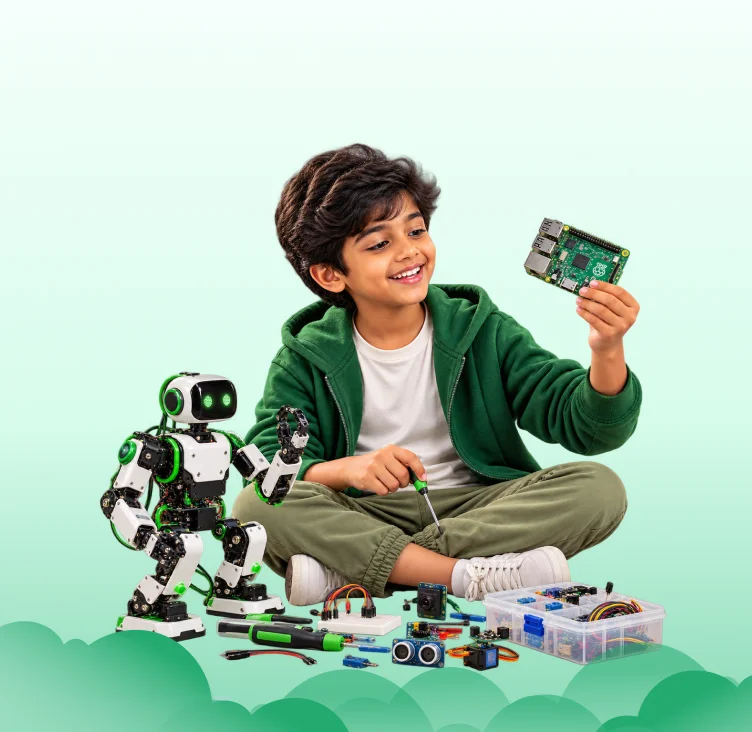
When children build a robot, they don’t just assemble electronic parts. They learn how sensors collect information, how programming controls a robot’s actions, and how mechanical components work together to solve real-world problems. Every project becomes an opportunity to experiment, think critically, and improve.
Today, robots are used in hospitals, factories, agriculture, space exploration, disaster management, and even our homes. As these technologies continue to expand, robotics education is becoming an important part of preparing students for the future.
Know more: What Is Robotics and How Are Robots Changing the World Around Us?
Learning robotics also introduces children to concepts such as automation, electronics, programming, and artificial intelligence in an age-appropriate way. Instead of simply consuming technology, they begin to understand how it works and how they can create solutions using it.
Explore the opportunity to learn robotics through hands-on projects with HackerKID’s Advanced AI Robotics Course for Kids.
Why Kids Should Learn Robotics at an Early Age
Children are naturally curious. They love exploring, building, asking questions, and discovering how things work. Robotics transforms this curiosity into meaningful learning experiences.
Starting early gives children enough time to develop both technical knowledge and essential life skills. Instead of memorizing theories, they actively apply concepts by building and programming robots that respond to real-world situations.
Here are some of the biggest benefits of introducing robotics education to kids:
Improves Problem-Solving Skills
Every robotics project presents a challenge. A robot may not move correctly, a sensor might not detect obstacles, or a program may contain errors. Children learn to identify problems, test different solutions, and improve their designs. This develops logical thinking that benefits every academic subject.
Encourages Creativity and Innovation
Robotics has no single right answer. Children imagine ideas, design solutions, and build unique robotics projects using their creativity. Whether it’s creating a smart dustbin, an automated plant watering system, or a line-following robot, each project encourages innovation and inspires children to think outside the box.
Builds Confidence Through Hands-On Learning
Nothing motivates children more than seeing something they built actually work. Completing robotics projects helps them gain confidence in their abilities while encouraging them to take on bigger challenges.
Makes Learning Fun
Unlike traditional classroom lessons, coding and robotics for kids combines games, experiments, electronics, and programming into exciting hands-on activities. Children stay engaged because they are actively creating rather than simply listening.
Develops Future-Ready Skills
Robotics naturally strengthens teamwork, analytical thinking, perseverance, and leadership. These skills are valuable not only in technology careers but also in everyday life.
The earlier children learn robotics, the more time they have to explore different technologies, discover their interests, and build a strong foundation for future learning.
How Learning Robotics for Kids Supports STEM Education
STEM stands for Science, Technology, Engineering, and Mathematics, four subjects that play a major role in today’s innovation-driven world. Robotics brings all four disciplines together in one exciting learning experience.
When children build a robot, they don’t study science, mathematics, or programming separately. Instead, they use all of them together to solve a practical problem.
For example:
- Science helps children understand electricity, motion, energy, and sensors.
- Technology introduces programming, electronics, and automation.
- Engineering teaches them how to design, build, and improve robotic systems.
- Mathematics is used for measuring distances, calculating speed, understanding angles, and controlling movement.
This integrated approach makes hands-on STEM learning more meaningful because children immediately see how classroom concepts apply to real-life situations.
Robotics also encourages children to think like engineers. They learn to ask questions, test ideas, fix mistakes, and continuously improve their projects. These experiences help children develop resilience and a growth mindset. Both qualities play an important role in helping them succeed inside and outside the classroom.
Future Career Opportunities in Robotics
Learning robotics at an early age opens the door to exciting career opportunities. As robotics transforms industries worldwide, children who build robotics skills today will be better prepared for tomorrow’s technology-driven careers.
Here are some exciting robotics careers that children can explore in the future:
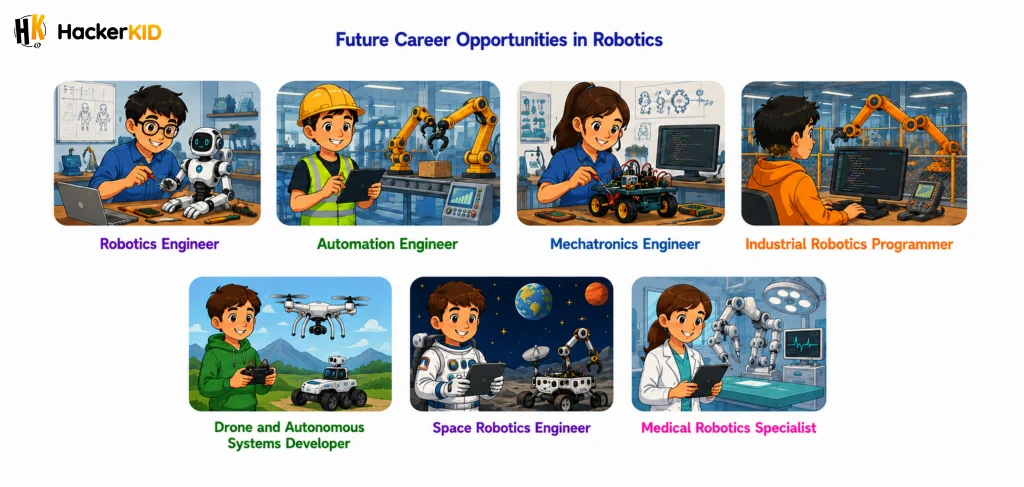
Robotics Engineer
Robotics engineers design, build, test, and maintain robots for industries such as healthcare, manufacturing, logistics, agriculture, and defence. They combine mechanical engineering, electronics, and programming to create machines that solve real-world problems.
Automation Engineer
Automation engineers develop robotic systems that perform repetitive tasks efficiently and accurately. These professionals help industries improve productivity by designing automated production lines, warehouse systems, and industrial robots.
Mechatronics Engineer
Mechatronics is an exciting field that combines mechanical engineering, electronics, robotics, and computer science. Professionals in this field design advanced machines, robotic devices, and intelligent control systems used across many industries.
Industrial Robotics Programmer
Industrial robotics programmers write and optimize the software that controls robots in factories and manufacturing plants. They ensure robots perform tasks safely, accurately, and efficiently.
Drone and Autonomous Systems Developer
Drones are being used for agriculture, mapping, construction, disaster management, and deliveries. Professionals in this field develop robotic drones and autonomous systems capable of operating with minimal human intervention.
Space Robotics Engineer
Space agencies rely on robotic systems to explore planets, repair satellites, and conduct scientific research in environments that are too dangerous for humans. Robotics engineers play an important role in advancing space exploration.
Medical Robotics Specialist
Robotics is transforming healthcare through robotic-assisted surgeries, rehabilitation devices, and advanced medical equipment. Specialists in this field help improve patient care by developing innovative robotic solutions for hospitals and healthcare facilities.
These careers may seem far away for today’s children, but every journey begins with learning the fundamentals. By introducing children to robotics at an early age, parents help them build the confidence, creativity, and technical skills needed to explore these exciting opportunities in the future.
How HackerKID’s Advanced AI Robotics Course Helps Kids Succeed
The right learning environment can make all the difference in a child’s robotics journey. While curiosity is the first step, children need a structured curriculum, expert guidance, and hands-on experience to build strong robotics skills with confidence.
At HackerKID, our Advanced AI Robotics Course for Kids is designed for children aged 7 to 17 years who want to explore the exciting world of robotics and future technologies. Through project-based learning, students build real-world robotics projects while developing problem-solving, creativity, logical thinking, and programming skills. Every lesson encourages children to experiment, innovate, and apply their knowledge in practical situations, making learning both engaging and rewarding.
Instead of simply learning theory, students apply their knowledge through practical projects that improve creativity, logical thinking, and problem-solving skills. This engaging approach makes learning enjoyable while helping children build confidence in using technology to solve real-world challenges.
Whether your child is a complete beginner or already interested in technology, HackerKID’s robotics classes for kids provide the right balance of learning, creativity, and innovation. By the end of the course, students gain practical experience, build an impressive project portfolio, and develop skills that prepare them for future learning and career opportunities.
Final Thoughts
The future belongs to children who can think creatively, solve problems, and adapt to new technologies. By starting learning robotics for kids at an early age, children build valuable STEM, coding, and problem-solving skills while preparing for exciting robotics careers and future opportunities.
Start your child’s robotics journey today. Enroll them in HackerKID’s Advanced AI Robotics Course for Kids and give them the opportunity to build robotics projects while developing future-ready skills that will benefit them for years to come.
FAQs
💬 Quick Answers 1. What age is best for kids to start learning robotics?
Kids can start learning robotics as early as 7 years old with age-appropriate activities and simple projects. As they grow, they can gradually explore more advanced robotics concepts, coding, and engineering.
2. Is robotics difficult for kids to learn?
Robotics can be easy and fun for kids when it is taught through simple explanations and hands-on projects. Children can start with basic robots and gradually learn more advanced concepts as their skills improve.
3. Is coding required to learn robotics?
Coding is not always required to get started with robotics. However, learning basic coding helps kids understand how to control robots, create actions, and build more interesting robotics projects.
4. What are the benefits of learning robotics for kids?
Learning robotics for kids can improve problem-solving, creativity, logical thinking, and teamwork. It gives children hands-on experience with technology while building skills that can support their future education and career opportunities.
5. What skills can kids develop by learning robotics?
Robotics helps kids develop coding, electronics, engineering, and technical skills. They also learn how sensors, motors, and other components work together through hands-on projects.
6. How can learning robotics help prepare kids for the future?
Robotics introduces kids to technologies and skills that are becoming important in many industries. It also gives them a strong foundation for exploring technology, engineering, and future robotics careers.
7. Can kids learn robotics online?
Yes, kids can learn robotics online through guided lessons, virtual classes, simulations, and project-based activities. Online robotics classes for kids can provide a flexible way to learn concepts and practice skills from home.
Table of Contents
What Is Robotics and Why Is It Important for Kids?
Why Kids Should Learn Robotics at an Early Age
How Learning Robotics for Kids Supports STEM Education
Future Career Opportunities in Robotics
How HackerKID's Advanced AI Robotics Course Helps Kids Succeed
Final Thoughts
FAQs


Related Posts
10 Easy Robotics Projects for Kids to Try (Beginner Level)
You might feel building a robot is hard, but it is easier than you think. With just a few basic …
August 11, 2026 | 8 mins read
Read More
What Are Robot Sensors and How Do Robots Use Sensors to Interact With the World?
Close your eyes for a second. Now try to walk across your room. Hard, right? You might bump into a chair …
August 11, 2026 | 7 mins read
Read More
What Is Raspberry Pi for Kids and How Can Kids Use It to Build Robotics Projects?
Technology gives children exciting ways to create, experiment, and solve problems. Raspberry Pi for kids makes this possible by combining …
August 11, 2026 | 8 mins read
Read More